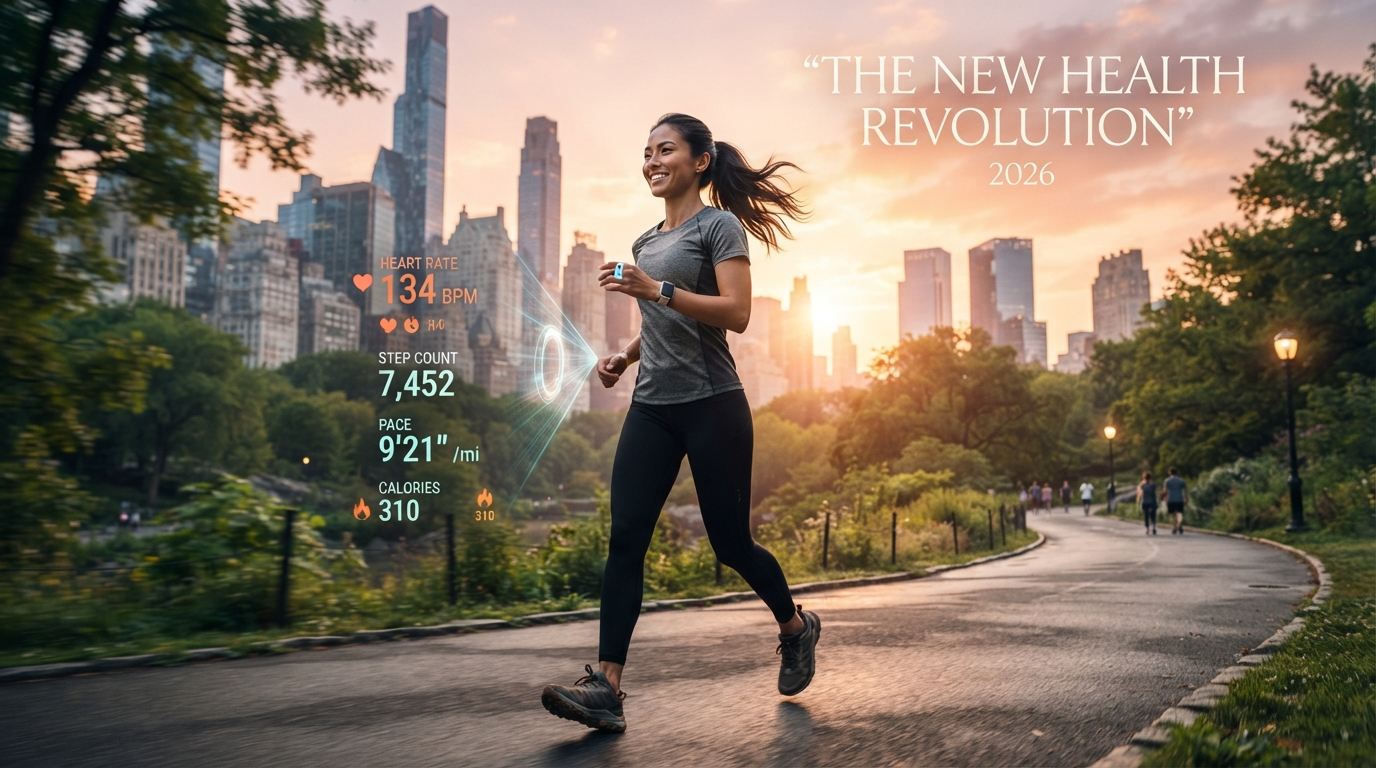
The New Health Revolution Has Already Started
What if one of the biggest changes in healthcare is happening outside hospitals?
Artificial intelligence, smartwatches, fitness trackers, smart rings and mobile applications are changing the way people understand their health and daily activity.
In 2026, technology is moving beyond simply counting steps. Modern digital health platforms can collect activity data, analyze patterns and help people understand their habits in ways that were difficult to achieve only a few years ago.
This creates an important question:
Could technology make healthy behavior easier, more measurable and more rewarding for billions of people?
The answer could shape the future of personal health.
Why This Matters to Almost Everyone
Physical inactivity is a global challenge.
The World Health Organization says that physical inactivity is one of the major risk factors for noncommunicable diseases and that regular physical activity provides significant physical and mental health benefits.
Modern lifestyles have made the problem more difficult. Many people spend large parts of the day sitting at desks, working on computers, driving, watching screens or using smartphones.
The challenge is not always a lack of information.
Most people already know that movement is important.
The bigger challenge is motivation, consistency and turning healthy intentions into daily behavior.
Watch: Why Physical Activity Matters
This video from the World Health Organization explains the global physical activity challenge and why becoming more active matters.
The Rise of Smart Health Technology
Wearable technology is becoming an important part of the modern digital health ecosystem.
Smartwatches, fitness bands, smart rings and other wearable devices can track different aspects of daily activity.
Depending on the device, people may be able to monitor information such as:
- Daily steps
- Distance traveled
- Heart rate
- Sleep patterns
- Exercise sessions
- Calories and energy expenditure estimates
- Activity levels
The value of this technology is not simply the number displayed on a screen.
The real value is awareness.
When people can see patterns in their behavior, they may find it easier to identify opportunities to become more active.
AI Is Taking Wearables to the Next Level
The next stage is the combination of wearable technology and artificial intelligence.
Instead of simply collecting data, intelligent systems can potentially analyze patterns and provide personalized insights.
Imagine a system that understands your normal activity, notices that you have been less active than usual, and suggests a realistic activity goal.
Imagine another system that analyzes your routine and helps you find better times for walking, exercise or recovery.
This is where AI can become more than a chatbot.
It can become a personal digital assistant for everyday behavior.
AI Health Is Becoming a Major Technology Trend
Artificial intelligence is rapidly expanding into health and wellness applications.
In 2026, major technology companies and healthcare organizations continue to explore ways AI can support health information, monitoring, personalized insights and digital healthcare.
At the same time, wearable technology is receiving increasing attention because it can provide continuous information about activity and other measurable signals.
The combination of AI and wearable technology could eventually create highly personalized digital health experiences.
But There Is a Problem Technology Alone Cannot Solve
A person can own the most advanced smartwatch in the world and still remain inactive.
A fitness application can display thousands of statistics and still fail to motivate someone.
Information is not the same as action.
This is why motivation and behavioral design are becoming increasingly important.
People need simple goals, visible progress, encouragement and reasons to continue.
Why Walking Is So Important
Walking is one of the simplest forms of physical activity.
It does not require a gym membership, expensive equipment or advanced athletic skills.
People can walk while commuting, during breaks, with friends, while exploring a city or as part of their normal daily routine.
For many people, increasing daily movement can be more realistic than attempting an extremely demanding exercise program.
The important principle is consistency.
Small Changes Can Become Powerful Habits
One of the biggest mistakes people make is trying to change everything at once.
A more sustainable approach is to start small.
For example:
- Take a short walk after a meal.
- Use stairs when practical.
- Walk during phone calls.
- Park slightly farther from a destination.
- Take short movement breaks during long periods of sitting.
- Set a realistic daily movement target.
- Track progress over time.
Small actions repeated consistently can become powerful habits.
What If Healthy Behavior Could Also Be Rewarded?
This is where the future of digital health becomes particularly interesting.
Technology has already created systems that reward people for completing tasks, engaging with platforms, creating content and participating in digital communities.
A similar concept can be applied to physical activity.
Instead of treating exercise only as something that requires effort, technology can create an additional layer of motivation around healthy behavior.
Walking can become measurable.
Progress can become visible.
Goals can become interactive.
And digital rewards can provide another reason to stay consistent.
The Idea Behind Move-to-Earn
The move-to-earn concept connects physical activity with digital rewards.
The basic idea is simple:
- Move your body.
- Track your activity.
- Reach goals.
- Receive digital rewards.
- Use technology to stay motivated.
This does not replace the health benefits of physical activity.
Instead, it adds another motivational layer.
Where Fitcoin Fits Into This Future
Fitcoin is built around an interesting idea: connecting walking and physical activity with digital rewards.
The broader vision behind this type of platform is to make everyday movement more engaging.
Instead of seeing walking as a boring task, people can turn daily activity into measurable progress and participate in a digital rewards experience.
The concept connects three rapidly developing areas:
- Fitness
- Digital technology
- Reward systems
As wearable technology becomes more common, opportunities to connect real-world activity with digital platforms may continue to grow.
The Future of Personal Health Could Be More Personalized
Traditional health advice often provides general recommendations.
Technology can move toward more personalized experiences.
Your activity patterns are different from someone else.
Your schedule is different.
Your goals are different.
Your motivation is different.
AI systems may eventually help create personalized recommendations based on individual behavior rather than generic information alone.
Wearables Are Becoming More Intelligent
The wearable market is evolving rapidly.
Smart glasses, smart rings, fitness trackers and AI powered wearable devices are becoming part of a broader technology ecosystem.
Recent technology developments show that companies are investing heavily in combining artificial intelligence with wearable hardware.
This could eventually create devices that are less like traditional gadgets and more like continuous digital assistants.
AI Could Become Your Daily Health Coach
Imagine starting your morning and receiving a simple personalized recommendation:
You have been less active during the last three days. A 20 minute walk today could help you return to your normal activity routine.
The future may involve systems that understand context rather than simply displaying numbers.
Instead of saying you walked 4,000 steps, an intelligent system could help explain what your activity means in relation to your personal goals and recent behavior.
But Health Data Requires Responsibility
There is another side of this revolution.
Health and fitness data can be highly sensitive.
People should understand what information their devices collect, where it is stored, who can access it and how it is used.
Technology companies must also take privacy and security seriously.
More data does not automatically mean better health.
Responsible use of data is essential.
AI Is Not a Doctor
Artificial intelligence can provide useful information and support, but people should not treat an AI system as a replacement for qualified medical professionals.
Wearable devices can also provide estimates and measurements that may not be appropriate for diagnosing medical conditions.
Anyone experiencing concerning symptoms or health problems should seek advice from a qualified healthcare professional.
The World Needs More Movement
The global physical inactivity challenge is too large to solve with one application or one device.
It requires better cities, accessible parks, education, healthier workplaces, community programs and individual motivation.
Technology can support these efforts.
It can make activity easier to measure, easier to understand and potentially more engaging.
Technology Should Encourage Better Behavior
The best technology does not simply consume our attention.
It can also help us reclaim it.
Instead of spending another hour scrolling through a screen, technology can encourage someone to go outside.
Instead of sitting continuously, a reminder can encourage movement.
Instead of losing motivation, visible progress can encourage consistency.
This represents a healthier relationship between humans and technology.
10 Simple Ways to Become More Active Today
- Start with a realistic walking goal.
- Take short movement breaks during work.
- Walk after meals when practical.
- Choose walking for short journeys when possible.
- Track your daily activity.
- Invite friends or family to walk with you.
- Use technology to monitor progress.
- Increase your activity gradually.
- Celebrate consistency rather than perfection.
- Find a reason that makes movement enjoyable.
Why Consistency Beats Motivation
Motivation changes from day to day.
Habits are more reliable.
You may not feel motivated every morning, but a simple routine can make movement easier to maintain.
The goal should not be perfection.
The goal should be building a lifestyle where movement becomes normal.
The Bigger Opportunity: A Healthier Digital Economy
The future of technology does not have to mean more time sitting in front of screens.
Digital systems can also encourage real-world behavior.
Fitness applications, wearable devices, AI assistants and reward platforms can work together to create experiences that connect the digital world with physical activity.
This could lead to a new category of products focused on rewarding healthy behavior.
What Could Health Technology Look Like in 2030?
By 2030, the distinction between technology and personal health may become increasingly difficult to separate.
People may use intelligent wearables throughout the day.
AI systems may continuously analyze patterns.
Personalized digital coaches may become normal.
Fitness goals may become connected to social communities and digital rewards.
And everyday movement could become a measurable part of a broader digital lifestyle.
The Most Important Technology May Still Be Your Body
Artificial intelligence is powerful.
Wearable technology is becoming more advanced.
Smartphones are becoming more intelligent.
But none of these technologies can replace the basic value of human movement.
The human body was designed to move.
Technology should help us remember that.
Trusted References
The information in this article is intended for education and general awareness. Readers should consult qualified healthcare professionals for personal medical advice.
- World Health Organization - Physical Activity
- World Health Organization - Measuring Physical Activity Using Wearable Devices
- World Health Organization - Integrating Wearable Technology Into Population Health
- Reuters - Technology and AI Wearables Coverage
- World Health Organization - Physical Activity Video
Final Thoughts
The health revolution of the next decade may not happen in one hospital, one laboratory or one company.
It may happen in millions of small decisions made every day.
Walking for another ten minutes.
Taking the stairs.
Moving during a work break.
Tracking progress.
Using technology to build better habits.
And finding new ways to make healthy behavior more rewarding.
Artificial intelligence and wearable technology can help us understand ourselves better, but the most important action still belongs to the individual.
Technology can measure the movement. You have to make the first step.
Discover a new way to connect movement, technology and digital rewards with Fitcoin.