ARTIFICIAL INTELLIGENCE | US TECHNOLOGY POLICY
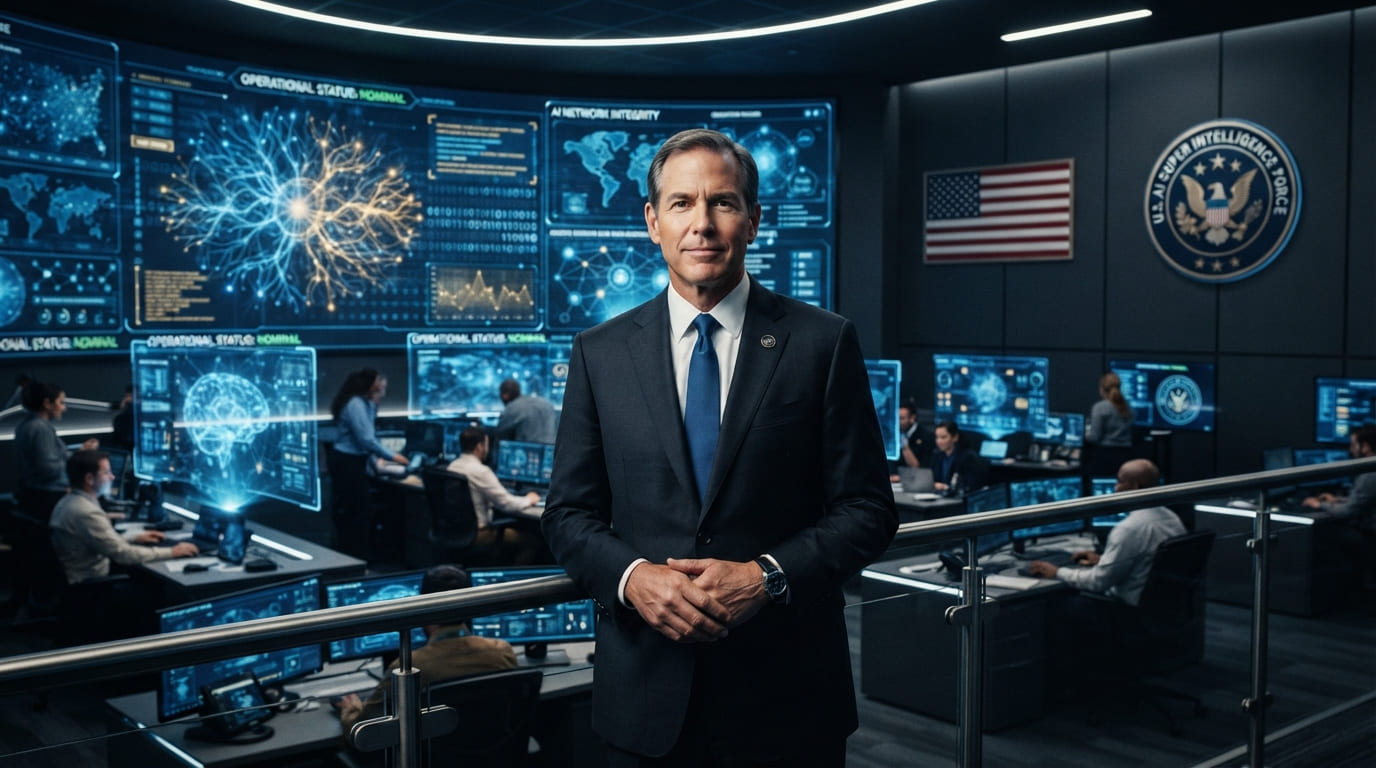
US President Donald Trump has named Director of National Intelligence Jay Clayton to lead a newly created federal artificial intelligence task force called the Super Intelligence Force. The group will coordinate federal AI efforts and has 120 days to assess major risks and opportunities associated with the technology.
President Donald Trump announced that Jay Clayton will lead the new Super Intelligence Force, a federal task force focused on artificial intelligence. The group will coordinate AI-related efforts across the US government, consult businesses, consumers and other organizations, examine risks and opportunities, and produce recommendations within 120 days about the federal government role in AI.
In This Guide
What Did Trump Announce?
US President Donald Trump announced that Jay Clayton, the Director of National Intelligence, will lead a new federal initiative focused on artificial intelligence.
The administration is calling the new body the Super Intelligence Force, or SIF.
The task force is expected to coordinate artificial intelligence efforts across different parts of the federal government while examining how rapidly advancing AI technology could affect the United States.
Trump has increasingly used the term super intelligence when discussing artificial intelligence and has presented leadership in the technology as an important strategic objective for the United States.
Jay Clayton will lead the Super Intelligence Force while continuing to serve as Director of National Intelligence.
What Is the Super Intelligence Force?
The Super Intelligence Force is a new US government task force created to coordinate federal efforts involving artificial intelligence.
Its work will extend beyond the technology industry itself.
The administration says the group will engage with consumers, AI companies, public-interest organizations, religious groups, critical infrastructure providers and other stakeholders.
The central objective is to examine how the United States can remain a global leader in advanced AI while also understanding the risks created by increasingly capable systems.
| Area | Role |
|---|---|
| AI Leadership | Examine how the US can maintain global competitiveness |
| AI Risks | Assess potential dangers associated with advanced systems |
| AI Opportunities | Study economic, technological and social opportunities |
| Government Response | Review federal capabilities for responding to AI incidents |
| Policy | Recommend the appropriate federal role in AI |
Who Is Jay Clayton?
Jay Clayton is currently the US Director of National Intelligence, giving him responsibility for coordinating and overseeing activities across the American intelligence community.
He assumed the intelligence leadership role in August 2026.
Clayton is also well known from his previous role as chairman of the US Securities and Exchange Commission.
He served as SEC chairman from 2017 to 2020.
His background in financial regulation and national intelligence places him at the intersection of several issues increasingly connected to artificial intelligence, including national security, economic competitiveness, technology policy and regulation.
Clayton previously led the Securities and Exchange Commission and now serves as Director of National Intelligence. He has been selected to coordinate the new federal AI task force.
What Will the AI Task Force Actually Do?
One of the task force main responsibilities will be examining both the risks and opportunities created by artificial intelligence.
The group is also expected to examine existing mechanisms used by the US government to report and respond to AI-related incidents.
These could include security breaches, hacking incidents and other situations involving advanced AI systems.
The task force will then consider whether existing federal capabilities are sufficient and recommend ways to strengthen the government response.
Another major question will be how much responsibility the federal government should assume as increasingly powerful AI systems are developed and deployed.
Why Are the Next 120 Days Important?
The Super Intelligence Force has been given a relatively short timetable for its initial work.
Clayton said the group will have 120 days to prepare a report examining artificial intelligence risks and opportunities.
The report is also expected to provide recommendations concerning the role the federal government should play.
This means the task force could influence the next stage of US artificial intelligence policy within only a few months.
| Task | Timeline |
|---|---|
| Assess AI risks | Within 120 days |
| Assess AI opportunities | Within 120 days |
| Review federal response capabilities | Part of initial review |
| Recommend government role | Included in report |
The first major report from the Super Intelligence Force is expected within 120 days, making early 2027 an important period to watch for possible US AI policy recommendations.
Who Else Is Part of the Super Intelligence Force?
Clayton will not be working alone.
The task force brings together officials from several important parts of the US government.
| Official | Position |
|---|---|
| Jay Clayton | Director of National Intelligence and task force leader |
| Andrew Ferguson | Federal Trade Commission Chairman |
| Emil Michael | Pentagon Chief Technology Officer |
| Scott Kupor | Director of the Office of Personnel Management |
The group will report to President Trump and White House Chief of Staff Susie Wiles.
The mix of intelligence, technology, consumer-protection and government-management officials illustrates how AI policy now extends across multiple areas of government.
Why Is Competition With China Important?
Artificial intelligence has increasingly become a major strategic competition between the United States and China.
The Trump administration has argued that excessive restrictions on American AI companies could weaken the country position against international competitors.
Clayton has also emphasized the importance of remaining at the forefront of the technology.
This creates one of the central policy challenges facing the new task force: balancing concerns about AI safety with the desire to maintain rapid technological development.
How can the United States reduce serious AI risks without slowing innovation enough to lose its technological advantage?
Why Has AI Safety Become Such a Major Issue?
The creation of the task force comes during an increasingly intense global debate about the capabilities and risks of advanced artificial intelligence.
Researchers, technology executives and lawmakers have raised questions about cybersecurity, autonomous AI agents, misinformation, employment disruption and the ability of governments to respond when powerful systems behave unexpectedly.
At the same time, artificial intelligence companies continue investing heavily in more capable models and infrastructure.
This has created tension between two major objectives: accelerating innovation and establishing safeguards before AI systems become even more powerful.
The Super Intelligence Force will now enter that debate from the highest levels of the US government.
Will the US Introduce Tougher AI Regulations?
The creation of the task force does not automatically mean that the United States will introduce strict new AI regulations.
Trump has generally favored a lighter regulatory approach and has argued that excessive government oversight could damage US competitiveness.
That means the task force recommendations will be particularly important.
Its report could help clarify whether the administration believes existing laws and government powers are sufficient or whether additional measures are needed.
Until the report is completed, the exact policy direction remains uncertain.
What Could This Mean for AI Companies?
The initiative could eventually affect companies developing advanced artificial intelligence systems in the United States.
Major AI developers will be watching for recommendations involving safety standards, incident reporting, cybersecurity, federal oversight and the deployment of highly capable AI agents.
However, the administration also wants the United States to maintain its leadership in artificial intelligence.
That suggests policymakers will be attempting to avoid measures they believe could significantly weaken domestic companies against international competitors.
- Possible changes to AI incident reporting
- New recommendations for federal oversight
- Greater coordination between government agencies
- More attention to advanced AI security risks
- Continued focus on US competition with China
Why This Story Matters Beyond the United States
Decisions made by the United States on artificial intelligence can have global consequences.
Many of the world largest AI developers and technology companies operate from the US, meaning American policy can influence how advanced AI products are built and deployed internationally.
Other governments are also developing their own approaches to AI regulation and safety.
Any major recommendations from the Super Intelligence Force could therefore contribute to the broader international debate about how powerful AI systems should be governed.
Frequently Asked Questions
What is the Super Intelligence Force?
It is a new US federal task force created to coordinate government efforts involving artificial intelligence and assess the technology risks and opportunities.
Who will lead the Super Intelligence Force?
US Director of National Intelligence Jay Clayton has been selected to lead the task force.
Who appointed Jay Clayton?
President Donald Trump announced Clayton appointment to lead the new AI initiative.
How long does the task force have to produce its report?
The group has 120 days to prepare its initial report on AI risks, opportunities and the federal government role.
Who else is part of the task force?
Officials involved include FTC Chairman Andrew Ferguson, Pentagon Chief Technology Officer Emil Michael and Office of Personnel Management Director Scott Kupor.
What will the AI task force investigate?
It will examine AI risks and opportunities, incident-reporting mechanisms, federal response capabilities and possible government responsibilities.
Will the task force regulate AI companies?
The task force itself is primarily responsible for coordination, review and recommendations. The exact regulatory impact will depend on its conclusions and subsequent government decisions.
Why is the United States focusing on AI now?
AI is increasingly viewed as an important economic, national-security and technological issue, while competition with China and concerns about AI safety continue to intensify.
Final Thoughts
The creation of the Super Intelligence Force marks another major step in the US government response to rapidly advancing artificial intelligence.
By placing Director of National Intelligence Jay Clayton in charge, the administration is connecting AI policy directly with national security, economic competitiveness and federal coordination.
The most important development will come within the next 120 days, when the task force is expected to deliver its assessment of AI risks and opportunities and recommend what role the federal government should play.
The outcome could influence not only American AI companies but also the wider international debate over how governments should respond to increasingly powerful artificial intelligence systems.
For now, the key question is whether Washington can balance two competing priorities: maintaining US leadership in AI while addressing growing concerns about the technology risks.
Reuters — Trump names intelligence chief Jay Clayton as AI czar and leader of the new Super Intelligence Force.
Associated Press — Jay Clayton selected to lead the new federal artificial intelligence task force.
The National — Trump announces Jay Clayton as head of the US Super Intelligence Force.