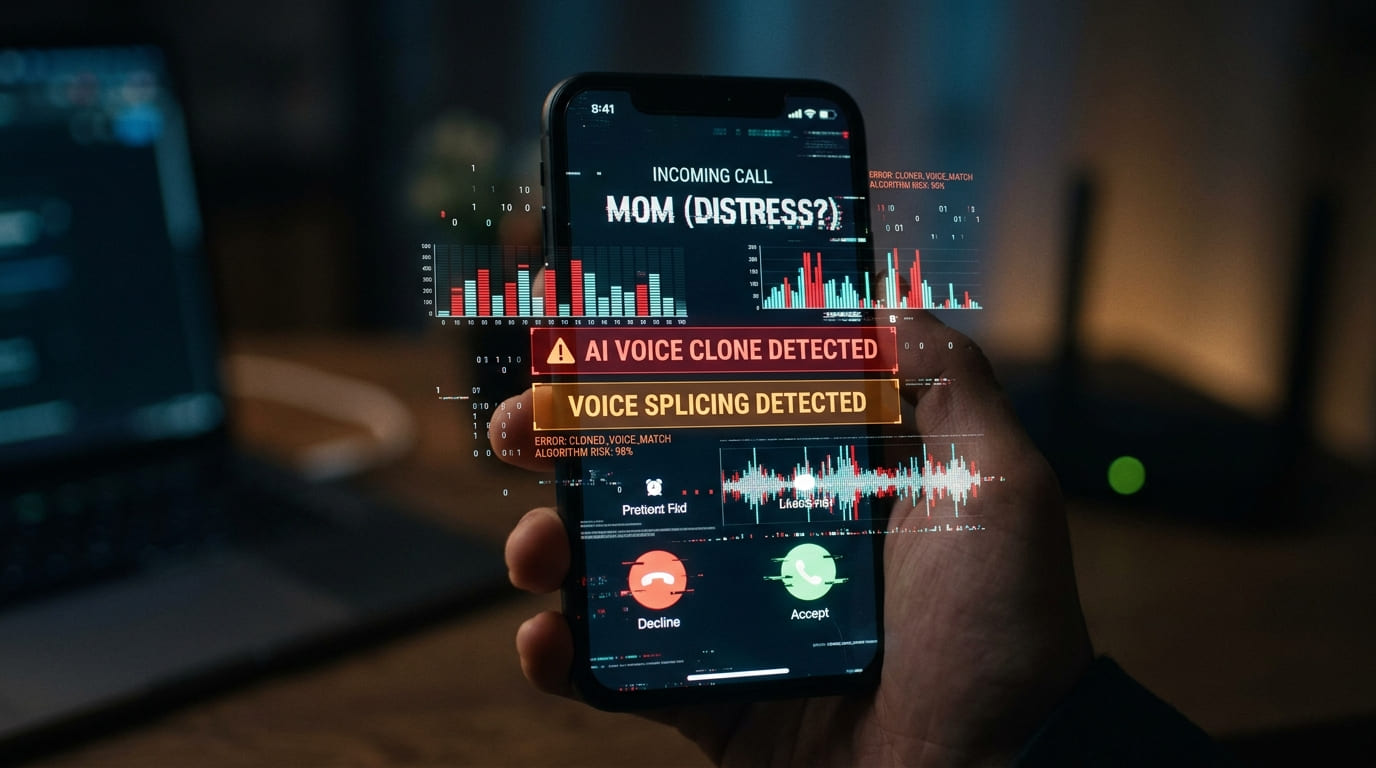
A frightening emergency call, a supposed lawyer and couriers at the door: an Orlando woman’s account illustrates how convincing impersonation scams can become.
A Florida woman says scammers impersonated a friend and persuaded her to hand over thousands of dollars. She suspects AI voice cloning, but its use in this case remains unverified. Authorities recommend calling loved ones back independently before sending money.
A Call That Sounded Exactly Like a Friend
In a case reported by WKMG News 6 in Orlando on October 5, 2026, a woman identified as Bonnie said she received a call from someone sounding exactly like her friend Carl. The caller claimed he had been jailed after a traffic crash and urgently needed help.
A second caller posed as a public defender and requested money. Bonnie reported handing thousands of dollars in cash to couriers who came to her home. When she finally reached the real Carl, he was not in jail and knew nothing about the supposed emergency.
Bonnie suspects AI voice cloning, but the news outlet could not independently establish how the voice was produced. Orlando police said the investigation was ongoing.
How AI Voice Cloning Works
Voice-cloning systems analyze recorded speech to learn vocal characteristics such as pitch, rhythm and pronunciation. Some systems can generate speech that resembles a target speaker from a relatively short sample.
Audio posted on social media, video platforms, public interviews or voice messages can expose samples of a person’s voice. The existence of this technology does not prove it was used in any specific reported scam.
Why Emergency Calls Are So Convincing
The attacker creates urgency: an accident, an arrest or a medical crisis. The caller may demand secrecy, claim a lawyer is waiting or insist that money must be sent immediately.
The goal is to prevent independent verification. A familiar-sounding voice, an emotional story and a second person pretending to be an official can make the scenario seem credible.
Warning Signs You Should Never Ignore
Be suspicious when a caller demands immediate cash, wire transfers, cryptocurrency or gift cards; forbids you from contacting relatives; claims to be an attorney without verifiable credentials; or sends a courier to collect money.
Caller ID is not proof of identity, and a voice that sounds familiar is not enough to authenticate a person.
What to Do Before Sending Money
End the call and dial the person using a number you already know. If they do not answer, contact another trusted relative or friend.
Establish a family verification phrase in advance, but do not share it publicly. Ask questions that are not answered on social media. Independently verify any lawyer, police officer or institution through an official published number.
Never hand cash to an unexpected courier on the instructions of a caller. If someone is in immediate danger, contact local emergency services through an official number.
If You Already Paid
Contact your bank or payment provider immediately and ask whether a transfer can be stopped or recalled. Preserve messages, numbers, transaction receipts, call times and descriptions of visitors.
Report the incident to local police. In the United States, reports can also be filed at ReportFraud.ftc.gov and IC3.gov. Recovery is not guaranteed, but prompt reporting can help investigators.
What the Orlando Case Does and Does Not Prove
The reported financial loss and the impersonation account come from the victim’s statements in a local news investigation. The precise amount, the identity of the perpetrators and the technical method of voice imitation were not independently established in that report.
It is therefore accurate to describe the incident as suspected AI-assisted voice impersonation, not a conclusively proven AI-cloning case.
Frequently Asked Questions
Can AI imitate a family member’s voice? Yes. Voice synthesis can produce convincing imitations, although quality varies.
Can a voice alone confirm identity? No. Always call back using a trusted number.
How much audio is needed? Some systems work from short recordings, but requirements vary by tool and conditions.
Was AI confirmed in the Orlando case? No. The victim suspected it, while the reporting outlet could not verify the method.
What is the safest first step? Hang up and independently contact the person who supposedly needs help.
Final Thoughts
A familiar voice is no longer reliable proof of identity. When a frightening call demands immediate money, independent verification is the most important defense.
Sources | المصادر
WKMG News 6 — Orlando investigation, October 5, 2026